
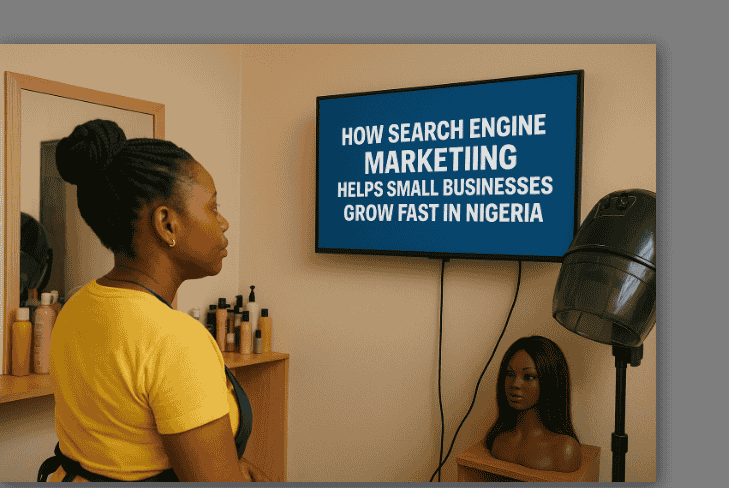
In this article, we’ll dive into search engine marketing (SEM)—what it really means, why it’s a game-changer for businesses of all sizes (yes, even churches), and how you can use it to attract customers, boost visibility, and grow profitably. If you’ve ever wondered how brands appear right when you need them on Google, this guide will show you how to make that work for you too.
If you were raised in Nigeria, you will remember that small kiosk at the street corner where Mama Chidinma sold everything—from cabin biscuit to Blue Band butter, Omo detergent to cold minerals inside her trusty Coca-Cola fridge. Word of mouth was her only advertising strategy. If she treated you well, you’d go home and tell your mum, “Mama Chidinma dey sell cheaper.” That single statement was enough to send the whole compound to her shop. Today, the same principle still applies, only on a bigger stage.
Fast-forward to today, things have changed. Nigerians no longer just ask their neighbors where to find the best tailor in Surulere or mechanic in Wuse. They ask Google. They type, “best mechanic near me” or “affordable tailor in Lagos,” and in seconds, results pop up. This is where search engine marketing (SEM) comes in—helping small businesses appear right in front of the exact customers searching for what they offer.
In a country where over 122 million people are online daily, search engine marketing is no longer luxury—it’s survival. In this article, I’ll show you how SEM helps small businesses in Nigeria grow fast, with relatable examples, simple strategies, and tips that work for our unique environment.
It will also interest you to read and discover 15 innovative business ideas in Nigeria tailored for young entrepreneurs. From tech to everyday hustles, learn profitable ventures you can start with low capital, tap into local demand, and build a sustainable business that thrives in Nigeria’s fast-growing economy.
What Exactly is Search Engine Marketing (SEM)?
Search Engine Marketing (SEM) is a form of digital marketing that helps businesses become more visible on search engines like Google. In simple terms, it’s like paying for a front row seat whenever someone searches for the products or services you offer.
Here’s how it works in practice:
• Imagine someone in Lagos types “best tailor in Lagos” into Google.
• Or a student in Abuja searches for “where to buy affordable phones.”
When those searches happen, Google typically displays two main types of results:
• Organic results – These are free listings that appear naturally through search engine optimization (SEO).
• Paid results – These are ads placed through SEM, where businesses pay to show up at the very top of the search page.
With SEM, your business doesn’t just wait to be discovered—it actively shows up right when potential customers are searching. That’s why it’s one of the most effective tools for small businesses that want quick, targeted visibility.
In short SEM is the act of using paid ads (like Google Ads) to make sure your business shows up when customers are actively searching for what you sell.
It’s powerful because it targets people who already need your product—so no money wasted shouting into the void.
Why Search Engine Marketing is a Game-Changer for Nigerian Small Businesses
Remember those days when posters on electric poles and radio jingles were the only way to advertise? While they still work in some areas, they can’t match the power of digital marketing in Nigeria today. Search engine marketing ensures your business is visible exactly when people need you.
• Someone types “affordable catering service Abuja” → Your ad appears.
• A student searches “buy second-hand laptop Ikeja” → Your shop shows up.
• A mother searches “children’s party planner near me” → You pop up with contact details.
• That’s targeted visibility—no wasting money on people who don’t need your service.
Benefits of Search Engine Marketing for Nigerian Small Businesses
In this segment, we’ll explore the top benefits of search engine marketing in Nigeria, showing how it boosts visibility, attracts customers, and helps small businesses grow faster in today’s digital age:
1. Instant Visibility in a Crowded Market
Imagine someone in Ikeja urgently searching “affordable phone repair near me.” With SEM, your shop can appear at the very top of Google in seconds, even above older, bigger competitors. This instant exposure means customers see you exactly when they’re ready to buy—not two weeks later when they’ve already fixed their phone elsewhere.
2. Highly Targeted Reach
Unlike posters pasted on walls where everybody sees them (even those who don’t care), SEM lets you narrow down your audience. For example, a catering service in Abuja can target only people in Garki, Wuse, or Maitama searching for “wedding caterers near me.” This saves money and ensures your ads reach only people who truly need your service.
3. Cost-Effective Advertising
Traditional adverts in Nigeria—billboards, radio jingles, or even flyers—often swallow budgets without clear results. SEM flips the script. With pay-per-click (PPC), you only pay when someone clicks your ad. That means your money goes directly into reaching real potential customers, not just passersby stuck in Lagos traffic glancing at a billboard. It’s smart, measurable, and budget-friendly for small businesses.
4. Competitive Advantage
In Nigeria, every street is a marketplace. You can have three tailors on one street, yet SEM makes your shop stand out by placing your ad directly in front of people searching online. Even if you’re a small salon in Surulere, you can outrank a bigger chain with the right Google ads strategy. This levels the playing field—small businesses can finally compete with giants.
5. Quick Results
SEO is powerful but can take months. SEM, on the other hand, works like instant noodles—fast! The moment your ad goes live, your business starts showing up. A fashion designer in Lekki can start receiving calls for fittings the same day they launch their campaign. For Nigerians who want quick wins, SEM is the shortcut to visibility.
6. Local Targeting → The Strategy
Local targeting is the smart way of making sure your ads only appear to people in the exact location where your business operates. Instead of shouting into the whole of Nigeria, you focus only on those who can realistically walk into your shop or call your service. For instance, a caterer in Abuja can use Google Ads to target people specifically searching for “birthday caterer in Garki” or “wedding food service Wuse.” The beauty is—you’re not wasting money advertising to someone in Port Harcourt when you can only deliver food in Abuja. Local targeting ensures your marketing budget is spent wisely, and every click has the potential to turn into a paying customer.
7. Measurable ROI
With SEM, there’s no guesswork. Google Ads shows you exactly how many people clicked, called, or bought from your ad. Compare that to printing flyers in Mushin—you’ll never know how many were trashed or used as akara wrap. With SEM, every naira spent can be tracked, so you know your true return on investment.
8. Scalable Marketing
SEM allows you to start small and grow. Maybe you begin with ₦5,000 in ad spend to test results. If you get customers, you can scale to ₦50,000 or more. The beauty is—you control the budget. Whether you’re a one-man business or a growing SME, SEM grows with you.
9. 24/7 Exposure
Your ad doesn’t need rest. While you’re sleeping, while you’re at owambe, even while NEPA has taken light—your SEM campaigns keep running. Nigerians often browse at odd hours (midnight data plans, anyone?). With SEM, your business is visible anytime, day or night.
10. Builds Brand Awareness
Even when people don’t click on your ad, they keep seeing your business name pop up. Over time, it builds familiarity. Just like how you remember that “Gala must be there” on Lagos traffic hold-ups, customers begin to remember your brand whenever they search. That recognition can turn into sales later.
11. Local Business Growth → The Result
Now, when you apply local targeting (and other SEM tactics), the result is local business growth. This is where the magic happens. Your small, community-based business starts attracting more nearby customers who are actively searching for you. A barber in Yaba can suddenly see new faces walking in because they found him through Google. A suya spot in Owerri can get extra orders at night because hungry people nearby searched “suya near me.” Growth becomes natural, steady, and measurable—your local presence gets stronger, and over time, your business expands without the stress of guesswork or wasted adverts.
The Nigerian Hustle Meets Google Ads Strategy
In Nigeria, the hustle is real—everybody is selling something. From Mama Ngozi frying puff-puff by the roadside to big supermarkets in Lekki, everyone wants attention. The problem is, the noise is plenty. This is where search engine marketing (SEM) changes the game. It gives small businesses the same fighting chance as big brands.
Even with a small budget—say ₦5,000 or ₦10,000—your Google ads strategy can push your small boutique, barbershop, or catering service to the top of search results. Imagine someone typing “best wedding photographer Abuja,” and your name appears first, even before established studios. That’s the power of SEM. But it doesn’t happen by chance; you need to know how to optimize keywords, target the right audience, and manage your budget wisely.
Understanding the Basics of Search Engine Marketing
Let’s break it down like gist under a mango tree, nice and simple:
• SEM (Search Engine Marketing) – Promoting your business on Google and other search engines so customers can find you faster.
• SEO (Search Engine Optimization) – Attracting free, organic traffic by ranking naturally on Google. This takes time but builds long-term credibility.
• PPC (Pay Per Click Marketing Nigeria) – Paying only when someone clicks on your ad. You’re not wasting money on people who scroll past.
• Google Ads Strategy – Designing smart, targeted campaigns that reach the right people at the right time.
When you combine these tools—SEM, SEO, PPC, and a proper Google ads strategy—you create a winning formula. Unlike traditional advertising (flyers, posters, or radio jingles), this combo doesn’t just hope people notice you; it ensures your business appears right in front of those actively searching for what you offer. That’s why Nigerian small businesses that embrace SEM grow faster than those relying on luck and word of mouth.
Practical SEM Tips for Nigerian Businesses
Now, let’s dive into some practical SEM tips tailored for Nigerian business owners—complete with cultural context, relatable local examples, and a few extra pro insights to give you an edge:
Tip 1: Use the Right Keywords
Keywords are the backbone of SEM. If you’re selling Ankara fabrics in Yaba, don’t just target “fabrics Nigeria.” That’s too broad and will swallow your budget quickly. Instead, think like your customer. Nigerians usually search with location or price in mind—“cheap Ankara Yaba,” “Ankara fabrics Lagos market,” or even “best Ankara seller near me.” The more specific and local your keywords, the better your chances of attracting ready-to-buy customers. Pro tip: Use free tools like Google Keyword Planner or even check the “related searches” at the bottom of Google to find what people are really typing.
Tip 2: Start Small with PPC Marketing Nigeria
One mistake many Nigerian small businesses make is to jump in with a big budget, hoping for quick wins. Don’t blow your entire budget in one week. Instead, start with a small campaign, maybe ₦5,000–₦10,000, and test different ads. Measure what works—whether it’s your wording, targeting, or timing—then scale up gradually. It’s like testing suya with one stick before ordering ten; better safe than sorry.
Tip 3: Optimize for Mobile
Here’s the truth: over 80% of Nigerians browse the internet with smartphones, not laptops. If your website loads slowly or looks funny on mobile, you’ll lose customers faster than NEPA takes light during rainy season. Make sure your site is mobile-friendly, easy to navigate, and loads quickly—even on slow data networks. Bonus tip: Add click-to-call buttons so customers can reach you instantly without stress.
Tip 4: Leverage SEO Services Nigeria
Ads are great for instant results, but SEO (Search Engine Optimization) builds long-term credibility. Even if you can’t afford ads yet, you can start building your online presence with SEO. Create blog posts answering common Nigerian questions (“Where to buy affordable laptops in Ikeja”), claim your Google Business Profile, upload photos of your shop, and keep your details updated. Consistency matters. With time, your business can appear on Google Maps and in organic results—for free.
Tip 5: Track and Measure Results
Don’t just run ads blindly. One of the biggest advantages of SEM is measurability. Use Google Analytics or the reporting inside Google Ads to see which keywords, ads, or locations are bringing in the most results. This way, you’ll know whether your money is bringing customers—or just disappearing like jollof rice at a wedding buffet.
Tip 6: Use Local Languages and Nigerian Slang
Not every Nigerian searches in “perfect English.” Some might type “cheap phone Abuja” instead of “affordable mobile devices in Abuja.” Others may even search in Pidgin or Yoruba. If your audience is more local, consider adding these variations. For instance, a mechanic could use keywords like “tokunbo car repair Ikeja” because that’s how Nigerians naturally search.
Tip 7: Don’t Ignore Negative Keywords
This one is advanced but powerful. Negative keywords are words you exclude from your ads so you don’t waste money. For example, if you sell brand-new phones, you should add “used” or “second-hand” as negative keywords, so your ads don’t show when people search for those. This saves money and keeps your targeting sharp.
Tip 8: Run Ads When Nigerians Are Online
Timing matters. Nigerians often browse late at night (thanks to midnight data plans) or early mornings during commutes. Schedule your ads to show during peak browsing hours. For example, food delivery businesses can run stronger campaigns around lunch and dinner times when hunger is at its peak.
Case Studies of Nigerians Who Tapped Into SEM
Now, let’s explore some inspiring real-life stories of Nigerians who tapped into search engine marketing to transform their businesses and multiply their earnings:
Case Study 1: The Suya Spot that Went Viral on Google
Aminu runs a small suya joint in Kaduna. Before SEM, he depended on late-night passersby. Then he launched a simple ad with “best suya Kaduna” and “affordable suya near me.” Suddenly, hungry students from ABU Zaria started trooping in with “Google sent me” vibes. Now, Aminu’s suya spot trends every weekend and he had to hire two extra hands.
Case Study 2: The Abuja Fashion Designer Who Broke Limits
Ngozi, a young tailor in Abuja, was struggling to compete with bigger boutiques in Wuse 2. She decided to try Google ads strategy with “custom made dresses Abuja” and “bridal tailoring Abuja.” Within months, brides-to-be were calling from Instagram, Facebook, and directly through Google. Today, Ngozi’s small shop is booked months ahead—and she credits SEM for leveling the playing field against big-name brands.
Common SEM Mistakes Nigerian Businesses Make
Before we wrap up, let’s take a closer look at some common SEM mistakes Nigerian businesses often make—and how you can avoid falling into the same traps:
1. Using Broad, Expensive Keywords Instead of Local Ones
One of the fastest ways to waste money on SEM in Nigeria is by chasing broad terms like “buy shoes Nigeria” or “best phones Nigeria.” These keywords are not only expensive, but they also attract people who may never buy from you. A smarter move is to go hyper-local: “cheap Ankara Yaba market” or “affordable car repair Owerri.” Nigerians often search like they talk: “hair stylist Ikeja under bridge” or “best amala place Surulere.” Using local slang and precise keywords ensures your ads reach serious buyers, not random browsers.
2. Ignoring Mobile Optimization
In Nigeria, over 85% of internet users are mobile-first. That means if your site loads slower than JAMB results or your “buy now” button is hidden somewhere only a detective can find, customers will bounce. A poorly designed mobile site is like locking your shop and expecting customers to buy from the window. Invest in mobile-friendly landing pages, test how fast your site loads on a 3G connection (common in rural areas), and make sure buttons and forms are finger-friendly. If your SEM ads lead to a clumsy mobile experience, you’re simply funding Google, not your business.
3. Running Ads Without Tracking Conversions
Running ads without tracking is like frying puff-puff without tasting the first batch—you’ll never know if it’s sweet or burnt. Too many Nigerian businesses set up Google Ads but never connect them to Google Analytics, conversion tracking, or even a simple phone-call tracking tool. The result? They keep spending without knowing what keywords or campaigns are actually bringing sales. Tracking lets you see if that ₦500 click turned into a ₦50,000 customer—or just another ghost visitor. Without it, you’re like a danfo driver navigating Lagos traffic without side mirrors: risky and expensive.
4. Copying Foreign Google Ads Strategy Without Considering Nigerian Search Habits
Nigeria is not America. Our search patterns, cultural terms, and buying behavior are very different. While an American might search “affordable catering services New York,” Nigerians type things like “cheap catering Abuja” or “owambe small chops Surulere.” Copying foreign ad templates without adapting to Nigerian search culture wastes money and misses your audience. Nigerians love slang, nicknames, and urgency-driven searches (like “emergency plumber Lekki”). SEM works best when your ads speak the way your customers search—not the way foreign textbooks suggest.
5. Forgetting Negative Keywords
This is one silent budget killer. Imagine you’re selling original Samsung phones but your ad keeps popping up for searches like “fake Samsung phone Ikeja” or “China copy Galaxy S20.” You’ll waste money attracting the wrong crowd—people looking for knock-offs. That’s where negative keywords come in. By telling Google what not to show your ads for, you save money and attract only quality customers. Think of it like chasing away “window shoppers” who only want to price but not buy. In Nigeria, where people love to “just dey look,” negative keywords are your bouncer at the door.
6. Spending Big Without Testing Small
Too many business owners act like SEM is a gamble. They throw ₦200k on one big campaign, hoping for magic. When results don’t come, they swear “Google Ads no dey work.” But the truth is, SEM is like testing pepper when cooking stew—you start with small, taste, then add more. The smart play is to start with ₦10k or ₦20k, monitor results, then scale up. Running ads without testing is like going to Mile 12 market and buying tomatoes in bulk without first checking for rotten ones—you’ll regret it.
7. Writing Ads That Sound Too Foreign
Nigerian customers don’t search for “Elegant Footwear Solutions” or “Affordable Culinary Delights.” That kind of grammar belongs in Shakespeare, not Google Ads. A Nigerian bride searching for food will type “cheap small chops Lagos” or “wedding caterer Abuja.” If your ads don’t sound like how your customers talk, you’ll miss them completely. Speak the everyday Nigerian language: direct, practical, and urgent. SEM works when your copy feels like gist, not like an Oxford dictionary entry.
8. Ignoring Local Competition
If you’re a small bakery in Ikeja and you’re running the same broad keyword campaigns as Shoprite or Cold stone, you’re setting yourself up to lose. Those big players have bigger budgets; they’ll outbid you every time. Instead, carve your niche with location-specific and product-specific keywords: “birthday cakes Ikeja GRA” or “custom wedding cakes Ojodu.” SEM is not about fighting Goliath with bare hands—it’s about using wisdom, targeting the “uncontested space” where the big guys aren’t paying attention. That’s how small Nigerian businesses win.
In Conclusion: My brother, my sister, the truth is simple: search engine marketing is the new word of mouth in Nigeria. Just like Mama Chidinma’s shop became popular because people spread the gist, your business can now become popular because Google spreads the gist for you.
If you’re serious about small business marketing in Nigeria, don’t wait. Start learning SEM, test PPC, invest in SEO services Nigeria, and watch your small business grow faster than suya disappears at a Friday night joint.
FAQ: Search Engine Marketing for Nigerian Small Businesses
1. What is search engine marketing?
It’s promoting your business on Google using ads (PPC) and SEO to reach more customers.
2. Is SEM expensive for small businesses in Nigeria?
No. You can start with ₦5,000 and grow gradually.
3. What’s the difference between SEO and SEM?
SEO is free traffic; SEM includes both free (SEO) and paid ads (PPC).
4. Can SEM work without a website?
Yes, you can run ads to your Google Business profile or WhatsApp link.
5. How do I choose keywords for Nigeria?
Think local: add your city, area, or slang people use.
6. Is SEM better than social media ads?
They work differently. SEM captures people already searching; social ads create awareness.
7. Which is better for beginners—SEO or PPC?
Start with PPC for fast results, then add SEO for long-term growth.
8. Do I need a digital marketing agency?
Not always. You can learn basics yourself, but agencies help scale.
9. How long does SEO take to work in Nigeria?
3–6 months for visible results, but PPC gives instant traffic.
10. Can SEM help me sell outside Nigeria?
Yes. You can target diaspora markets and international buyers.
11. How do I track SEM results?
Use Google Analytics or the built-in Google Ads dashboard.
12. Is SEM effective for local service providers?
Absolutely—mechanics, tailors, caterers, schools, and salons benefit most.

