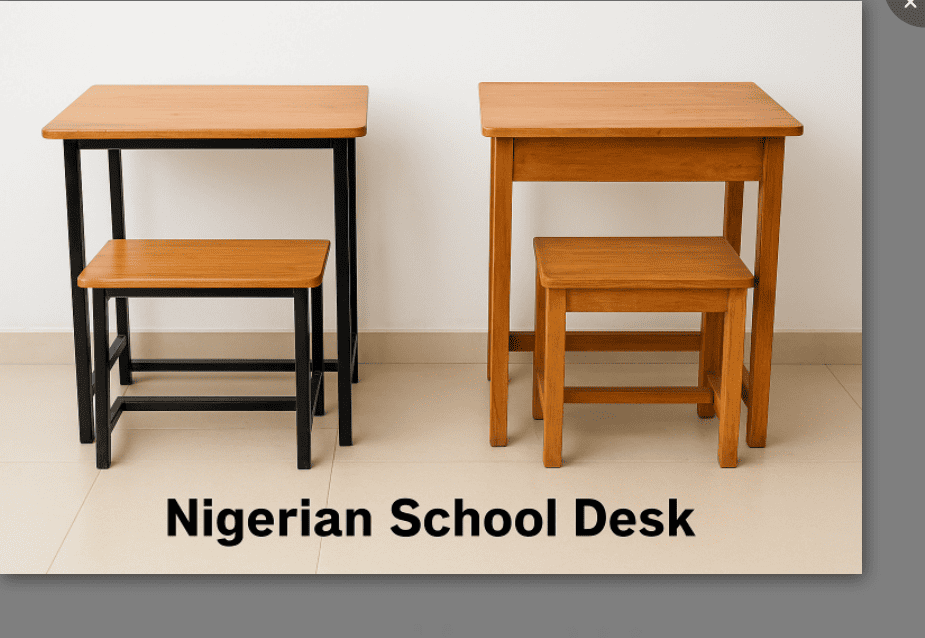
If you ever attended a Nigerian public primary or secondary school in the 90s or early 2000s, you probably remember the struggle with school desk. Those wooden desks with uneven legs that wobbled like “bole stand” on a windy day, or the metal desks that squeaked every time you shifted your waist — they were a big part of our story. In fact, many of us perfected our handwriting on desks that had names like “Chinedu loves Amaka” boldly carved into them.
But beyond the humor, one truth remains: the school desk matters more than we realize. A good school desk is not just furniture; it’s a silent teacher. It shapes posture, concentration, and even the way a child engages with learning. On the other hand, a poorly designed or uncomfortable desk can be a big distraction.
So, if you are a parent, teacher, school owner, or policymaker, this article will show you why the right school desk is critical for improving student productivity in Nigeria, how to make smart choices, and what to consider whether you’re buying or maintaining one.
Discover the meaning of citizenship education, its importance in Nigeria, and how it shapes responsible citizens. Learn key roles, benefits, and why it matters for students, schools, and national development.
Why the School Desk is More Than Just Furniture
In Nigeria, many people see a school desk as just another item on the procurement list — something to tick off when equipping a classroom. But for students, a desk is more than wood and nails. It’s like a daily companion, a silent partner in their learning journey.
Think about it: from Monday to Friday, a child spends hours at that desk — writing, reading, doodling, and sometimes even dozing off after break time when the sun is hot. That small piece of furniture becomes the stage for countless moments: the nervous scribbles during WAEC exams, the hurried jotting of notes when the teacher is dictating “like a radio without battery,” and the quiet prayers whispered before test papers are handed out.
Now, picture three students struggling on a desk meant for two. One child’s elbow is pushing another’s notebook, while the third is half-bent, trying to balance on the edge. Instead of focusing on their work, they’re fighting for space. Productivity? Zero. Comfort? Nowhere to be found.
At the end of the day, when students are comfortable, they learn better. A school desk might look ordinary, but in reality, it is one of the most powerful tools that can shape how effectively a child learns in Nigeria.
School Desk Nigeria: Local Realities We Must Address
Now, let’s talk about the Nigerian reality. We know the challenges: overcrowded classrooms, budget constraints, and sometimes poor quality furniture that doesn’t last. Some schools even use benches instead of proper desks, which makes studying uncomfortable.
But here’s the good news — local school desk production in Nigeria is growing. Many carpenters and furniture makers now create durable, affordable designs using local materials like hardwood. This not only reduces the school desk price but also supports local businesses.
For parents and school owners, buying from trusted Nigerian school furniture makers ensures you’re investing in desks that can withstand the daily “wahala” of students.
How the Right School Desk Boosts Productivity
A school desk is not just where students keep their books; it directly affects how they learn, think, and even behave in class. In fact, a desk can be the difference between a child who listens with full attention and one who spends half the lesson distracted, shifting from side to side like a generator with low fuel.
1. Comfort Equals Concentration
Let’s be honest — nobody learns well when they are uncomfortable. Imagine sitting for six hours on a wobbly desk that is too high for your height. Your legs can’t touch the ground properly, your back starts aching, and instead of paying attention to the teacher, your brain is busy shouting, “When will break time come?”
On the flip side, when a student has a desk that matches their size, everything changes. They can sit upright, rest their arms comfortably, and concentrate without unnecessary distractions. A proper desk creates the kind of calmness that allows the brain to focus on algebra, essay writing, or even cramming government dates without stress.
When comfort is in place, concentration becomes natural — and that’s where productivity begins.
2. Good Posture, Better Writing
A lot of Nigerians can still remember when teachers would shout, “Sit properly, bend your back, and hold your pen well!” The truth is, posture plays a huge role in how students write and learn. A proper school desk is like a silent coach — it naturally positions the body in the right way.
When the desk is too low or too high, students end up bending awkwardly. That’s why you’ll see some children twisting like “okada riders on bad road,” with one shoulder higher than the other. Over time, this not only affects their handwriting but can also lead to back and neck pain.
On the other hand, when the desk is well-designed, the back stays straight, the arm rests properly on the table, and the handwriting flows neatly. Teachers spend less time correcting posture, and students gain confidence because their notes look organized and readable. Remember, handwriting is part of productivity — if students can write clearly and comfortably, they can think faster and learn better.
3. Less Distraction in Class
Have you ever tried learning in a noisy environment? It’s almost impossible. Now imagine that noise coming not from outside, but from inside the class — creaking desks, quarrels over space, or the constant sound of wood hitting the floor because one leg of the desk is shorter. That’s the reality in many classrooms with poor furniture.
A sturdy and properly spaced school desk changes the game. No more elbow fights when three students are forced to squeeze into a desk made for two. No more grumbling about broken wood or missing screws. Instead, students can focus on the blackboard while teachers enjoy a calmer classroom.
Less distraction also improves discipline. When desks are well-arranged and stable, students pay attention instead of shifting around or standing unnecessarily. Teachers can even move easily between rows to supervise. The result? A smoother flow of teaching and better productivity for everyone in the room.
5. Encourages Active Learning
Think back to when you had to balance your exercise book on your lap because the desk was too small or broken. Many students still go through that struggle today. Instead of focusing on the lesson, they are busy shifting their books, chasing pencils that keep falling, or trying to manage space with their seatmate.
A well-designed school desk solves this problem by providing enough surface area for books, notebooks, and even extra learning materials. With proper space, students can write notes, follow examples on the board, and still have room for their ruler, eraser, or mathematics set. It sounds simple, but this freedom actually encourages active participation.
When students don’t have to worry about scattering their belongings on the floor, they are more eager to raise their hands, answer questions, or attempt classwork. A good desk creates an environment where learning feels organized, stress-free, and enjoyable.
6. Supports Long Study Hours
In Nigeria, students often spend long hours in class — from morning assembly to closing bell, sometimes even extra lessons after school. Sitting for that long on a poorly made desk is pure punishment. Before the second period, some children are already stretching their backs or kneeling on the chair just to find comfort.
The right school desk changes the story. With the right height and support, students can sit through long study hours without unnecessary pain or distraction. Instead of counting minutes until break time, they can focus on learning. It also helps during exam periods when students spend extra hours revising — a comfortable desk keeps them steady and sharp.
Parents may not realize it, but the quality of the desk contributes to how much knowledge a child retains after a long school day. A good desk reduces fatigue, protects posture, and ensures that productivity doesn’t drop as the day progresses.
6. Supports Long Study Hours
In Nigeria, students are no strangers to long hours in class. From morning assembly, through double mathematics periods, down to after-school lessons, they sometimes spend up to 7–8 hours seated daily. Now imagine enduring all that on a shaky or uncomfortable desk — it feels like running a marathon with slippers instead of proper shoes.
A good school desk makes those long hours bearable. It reduces back strain, supports proper posture, and helps students remain alert from the first bell to the last. Instead of wasting energy twisting and stretching for relief, they channel it into listening, note-taking, and problem-solving.
Even during exam periods, when revision runs late into the afternoon, a quality desk keeps fatigue away. Students can focus on their work, and teachers don’t have to deal with a class full of restless, distracted learners. Comfort extends productivity, and in Nigeria’s competitive learning environment, that’s a huge advantage.
7. Improves Classroom Order
If you’ve ever stepped into a class where desks were scattered randomly, you’ll understand how disorganized it feels. Students shout over one another, teachers struggle to walk through, and learning becomes chaotic. But when school desks are sturdy and neatly arranged, the entire room takes on a new atmosphere.
Orderly desks encourage discipline. Students know their space, teachers can move freely between rows, and there’s less temptation for mischief. It also helps during group work or practical lessons — everyone has a clear working area, and materials don’t get lost easily.
In fact, teachers often say that classroom management begins with the furniture layout. When desks are well-structured, the class feels calmer, teaching flows smoothly, and students naturally adjust to a culture of order. It may look like a small detail, but in practice, a good desk arrangement can save teachers hours of stress and keep students more productive.
School Desk Maintenance: Tips for Nigerian Schools
Even the best school desk needs care. In Nigeria, we sometimes have the habit of “use it until it spoils,” but when it comes to school furniture, that approach can cost schools a lot of money in replacements. Proper maintenance doesn’t just save money — it also keeps classrooms neat, organized, and welcoming for students.
Think about it: a classroom filled with broken, scribbled-on desks can discourage students, while a well-kept one makes them feel proud of their learning environment. The truth is, small efforts made regularly can keep desks in top shape for years.
Here are some practical tips schools can use:
• Teach students not to carve names or graffiti.
Almost every Nigerian has sat on a desk with “I love Ngozi” or “Man U for life” boldly scratched into the wood. While it may look funny, it weakens the desk surface and makes it rough for writing. Schools should encourage respect for furniture as part of discipline.
• Apply varnish to wooden desks yearly.
A simple coat of varnish not only makes desks look fresh but also protects them from moisture, dust, and termites. It’s like giving the furniture “skin care” to keep it glowing.
• Tighten bolts and screws on metal desks regularly.
Nigerian students are energetic — desks often shake, wobble, and bend under pressure. A quick weekly or monthly check to tighten screws can prevent accidents and extend lifespan.
• Store extra desks in dry rooms.
Many schools make the mistake of keeping spare desks outside, under rain and sun. This speeds up rust, termite attacks, and decay. A dry, well-ventilated store room keeps them safe until they’re needed.
• Assign classroom monitors.
Teachers can appoint students to oversee furniture care — no dragging desks across rough floors, no sitting three on a two-seater, and no unnecessary rough play. With student involvement, maintenance becomes part of school culture.
• Repair small issues before they become big.
A loose leg, cracked plank, or missing screw might look minor, but if ignored, it can make the desk unusable within weeks. Early repairs save schools thousands of naira in replacements.
Little actions like these prolong the lifespan of school desks in Nigeria, reduce costs, and create a learning environment where students are proud to sit and study. After all, a tidy desk equals a tidy mind.
Choosing the Right School Desk in Nigeria
Selecting the right school desk in Nigeria goes beyond just picking whatever a carpenter or supplier offers. For students, the desk is where they spend most of their school hours — learning, writing, eating snacks during break, and even dozing off sometimes. A poorly chosen desk can frustrate both students and teachers, while the right one improves comfort, discipline, and productivity.
Here are key things to consider before buying:
i. Size – Match desk height with student age group: You can’t expect Primary 1 children to sit comfortably on desks meant for SS2 students. Desks should be age-appropriate, ensuring that feet touch the ground and backs rest properly. Wrong sizes force students to bend awkwardly like “okada riders on a bad road.”
ii. Material – Hardwood or metal frames last longer: In Nigeria, rough use is the order of the day. Desks made with cheap plywood or soft wood don’t survive more than a few terms. Hardwood like iroko, or desks with solid metal frames, can withstand years of use. Schools looking for durability should invest wisely.
iii. Durability – Can it survive rough handling: Let’s be real — Nigerian students are not always gentle. Some lean back on desks, some bang them during debates, and others drag them across cement floors. A durable desk should survive this “Nigerian test of strength.”
iv. Comfort – Is it spacious enough: A cramped desk makes writing stressful. Each student needs space for books, notes, and writing without elbow fights with their neighbor. A comfortable desk encourages neat handwriting, better concentration, and less classroom noise.
v. Budget – Factor in both price and long-term use: Many schools go for the cheapest option, only to spend more on constant repairs and replacements. A smart budget looks beyond the price tag and considers how long the desk will last. Sometimes, paying more upfront saves thousands of naira later.
vi. Aesthetics – Does it make the classroom inviting: A bright, well-finished desk changes the whole mood of a classroom. Students feel proud sitting on clean, well-designed furniture instead of dull, broken ones. A good-looking classroom can even boost discipline.
Choosing the right school desk Nigeria requires balancing affordability with quality, because in the long run, students’ comfort and performance are directly tied to the furniture they use daily.
Local School Desk Production: Supporting Nigerian Economy
Buying a school desk in Nigeria is not just about filling a classroom with furniture; it’s also about shaping the economy. Every time a school chooses to order desks from a local carpenter or furniture maker, it is more than a purchase — it is an investment in people, skills, and communities.
Think about it: when schools import ready-made desks, millions of naira leave the country. But when we buy local, the money circulates here. The carpenter in Mushin feeds his family, the sawmill in Benin sells more planks, the iron bender in Aba gets steady work, and even the paint seller in Onitsha makes a sale. One school’s decision to support local production creates a ripple effect of jobs across Nigeria.
Beyond job creation, local production allows for customization. Nigerian carpenters understand the needs of our schools — from producing sturdy desks that survive “Nigerian-style rough handling,” to making age-appropriate sizes that fit both nursery pupils and senior secondary students. Imported desks may look fancy, but they often don’t match the realities of our classrooms.
By supporting local school desk production, schools are not only empowering craftsmen but also reducing dependence on imports, saving foreign exchange, and boosting national pride. After all, it feels good when a parent walks into a classroom and sees well-made desks stamped “Made in Nigeria.”
In the long run, buying local strengthens the economy and gives students a sense of ownership and pride in their learning environment.
In Conclusion: The right school desk is not just wood and nails — it’s a tool that shapes the learning experience. A comfortable, durable desk improves focus, posture, and student productivity. For Nigerian parents, teachers, and school owners, investing in the right desk means investing in the future of our children.
So, the next time you see a desk, don’t just see furniture. See the silent partner helping a child chase their dreams.
Frequently Asked Questions (FAQs)
1. Why is the school desk important in Nigeria?
It improves comfort, focus, posture, and overall student productivity.
2. What is the average school desk price in Nigeria?
Between ₦30,000 – ₦75,000 depending on size and material.
3. Where can I buy affordable school desks in Nigeria?
Local carpenters, furniture markets, and specialized school furniture suppliers.
4. How do I maintain a school desk?
Regular varnishing, tightening bolts, and discouraging carvings.
5. What materials are best for Nigerian school furniture?
Hardwood and metal frames are the most durable.
6. Can cheap school desks last long?
Not always. Durable desks are better for long-term savings.
7. How can schools reduce school desk costs?
By bulk buying from local producers and negotiating prices.
8. Do school desks affect student handwriting?
Yes, proper posture and desk height improve handwriting.
9. Why do some schools still use benches?
Budget constraints and lack of access to quality furniture.
10. How many students should share a school desk?
Ideally two, though overcrowded classes often squeeze in three.
11. Can parents buy school desks individually?
Yes, especially for home schooling or private study areas.
12. What’s the lifespan of a quality school desk?
5–10 years with proper maintenance.
13. Is it better to buy imported or local school desks?
Local school desks support the Nigerian economy and are often more affordable.
Having seen how the right school desk enhances productivity, focus, and comfort in Nigerian classrooms, you should also explore: “Top 10 Components of Civic Education With Examples and Benefits.”